Elves are humanoid beings which originate from Germanic mythology and folklore. They are commonly depicted in one of two different forms:
- Small nature spirits affiliated with the fairies. These are the kind usually found in Celtic mythology.
- A different race of humanoids who are human-sized and occasionally interact with humans. These are the kind usually found in Germanic mythology.
Myths & Legends
They are supernatural beings in Germanic mythology and folklore, elves were first attested in Old English and Old Norse texts and are prominent in English and Scandinavian folklore.
In early modern folklore, they were connected with fairies. However, ever since J. R. R. Tolkien's fantasy novels which included elves became popular, elves have become more popular and tend to lean more towards the human-sized type.
Over time, the word elf, as well as the literary term fairy, evolved to a general denotation of various nature spirits like Puck, hobgoblins, the English and Scots brownie, the Northumbrian English hob and so forth. These terms, like their relatives in other European languages, are no longer clearly distinguished in popular folklore.
Abilities
They have been portrayed to be long-lived or immortal and they have magical powers attributed to them, especially powers related to nature.
Appearance
Elves are often pictured as youthful-seeming men and women of great beauty living in forests and other natural places, underground or in wells and springs. Elves have many forms; some are tiny, some are tall and female elves often seem human, but some say they are empty from the back, like a hollow tree.
In relation to the beauty of the Norse elves, there are some Old English words such as ælfsciene ("elf-beautiful"). These facts indicate that there may be some similarities (specifically in regards to beauty) between Norse and Old English Elf mythology.
English Mythology
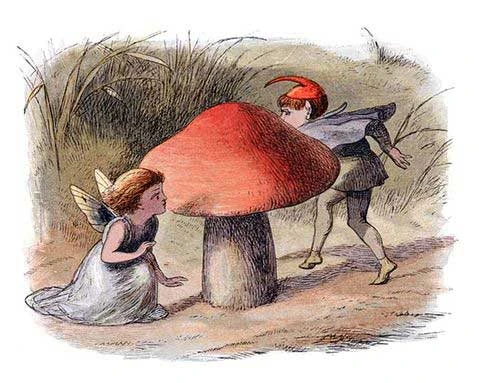

In English mythology Elves were first thought of as ambivalent, beautiful beings with magical powers, and frequently made appearances in ballads of English and Scottish origin, as well as folk tales. Many involve trips to Elphame or Elfland, a mystical realm which is sometimes an eerie and unpleasant place.
English folktales of the early modern period commonly portray elves as small, elusive people with mischievous personalities. They are often portrayed as children with distinctly different facial characteristics (such as is associated with "Williams syndrome") and fair hair.
They are not evil but might annoy humans or interfere in their affairs. They are sometimes said to be invisible. In this tradition, elves became similar to the concept of fairies. As people from the English countryside immigrated to America, they brought elements of English folklore with them, and this particular depiction of elves then evolved in America into the Christmas elves of pop culture.
Harmful Elves
Although elves could be considered to be beautiful and potentially helpful beings in some sections of English-speaking society throughout its history, Later Old English folklore also attests to alignments of elves with demons and more sinister behavior, such as harming or killing humans and livestock. An example of such Elves is on line 112 of Beowulf:
Origins
The English word elf is from the Old English ælf or elf; in compound as ælfadl "nightmare," or ælfsogoða "hiccup," afflictions apparently thought to be caused by elves. The Modern German Elf (m), Elfe (f), Elfen is a loan from English. The word "oaf" may also simply a variant of the word elf, presumably originally referring to a changeling or to someone stupefied by elvish enchantment.
Elf shots were considered to be the arrow-heads of elves (and witches), which later also meant a sharp pain (possibly caused by elves). They were considered to have healing power. Later the stones turned out to be Neolithic flint arrow-heads.
Norse Mythology
The earliest preserved descriptions of elves comes from Norse mythology, where they are known as álfar. They are commonly described as semi-divine beings associated with fertility and the cult of the ancestors. Just like ghosts, the elves were not bound by all physical laws and could pass through walls and doors. In addition to this, Kormáks saga accounts for how a sacrifice to elves was apparently believed able to heal a severe battle wound.
Despite their ethereal nature, according to Norse Mythology it was possible to marry and have children with them between different races. Högni and Skuld were such beings. These half-alfar are also found in the Heimskringla and in The Saga of Thorstein, where Viking's Son tells of a line of local kings who ruled over Álfheim, and since they had elven blood they were said to be more beautiful than most men.
Men could be elevated to the rank of elves after death, such as king Olaf Geirstad-Elf. The smith hero Völundr is identified as 'Ruler of Elves' in the poem Völundarkviða, who is the son of a king of the 'Finnar'. They are Arctic people respected for their shamanic magic (most likely, the sami).
In Norse mythology, two kinds of distinctions between elves exist, the Light Elves and the Dark Elves. Snorri in the Prose Edda states that light elves live in Álfheim, while dark elves dwell underground, and are connected to dvergar (or dark dwarves).
Light Elves
In Norse paganism, Light Elves were beautiful creatures and were considered to be “guardian angels”. The Vanir god Freyr was the ruler of Álfheimr, the home of the light elves. In terms of hierarchy, Light elves were minor gods of nature and fertility; they could help or hinder, humans with their knowledge of magical powers. They also often delivered an inspiration to art or music.
Dark Elves
Been the obscure counterpart of the Light Elves, the Dark Elves (sometimes called Black Elves) resided in Svartálfaheimr. The Dark Elves hated the sun and its light, because if they were touched or exposed to it, they would immediately turn to stone. They used to annoy and threaten humans, to the point that nightmares were thought to be produced by the Dark Elves. These Dark Elves were called mare. A mare would sit on a sleeping person’s chest and whisper bad dreams to haunt the person. These elves could also haunt animals, especially horses.
Other Elves by Region
- Expression of belief in huldufólk or "hidden folk", the elves that dwell in rock formations, is common in Iceland. Studies have been done which determines that such superstitions in these kind of creatures and ghosts still remains there.
- In Norway and Sweden they have Huldra, which are beautiful women also similar to the Succubus.
- In Denmark, there are two common types of Elves (Elvere), the Mist Elf and the Huldra (such as is also found in Norway or Sweden). The Mist Elves are also known to enjoy dancing, and if a man or woman falls for their charm then the human will dance with them until they die from exhaustion, making them a more sinister version of the elves.
- Elves would also often play roles as the protectors of children, mostly because of their palyful demeanor towards them. Exemplified in the character of Ándrjas, originating in Gotland, Sweden; This elvish being would bring warm and safe winter nights to children if they left a small wooden horse outside of their window the night of winter solstice, tradition which later would change into the children being rewarded with chocolate treats if they obeyed their parents.
Germany
- According to German and Danish folklore, the Erlkönig ("Elf-King") appears as an omen of death.
- The german Weiße Frauen (white woman) are elven-like spirits that may have derived from legends of light elves.
- The German word for nightmare, Alptraum, means "elf dream" while the archaic form Alpdruck means "elf pressure", which both have to do with the belief that an elf sitting on a sleeper's chest resulted in nightmares, similar to the Scandinavian belief in the mara or mera.
- In Christian folklore, the elber began to be described as mischievous pranksters that could cause disease to cattle and people, and bring bad dreams to sleepers.
- Drude is a generic term for nocturnal beings especially demonic elves like Alpen (Males) and Mares (Females) who were later adopted to Christianity.
Modern Depictions
Following the success of J. R. R. Tolkien's epic work The Lord of the Rings—wherein a wise, angelic people named Elves play a significant role—they have become staple characters of modern fantasy.
A convention of modern fantasy usage for "elf-like" characteristics is: the v in elven or elvish refers to human-sized elves (who correspond more closely to the mythology of the Viking Era), whereas the f in elfin or elfish refers to tiny-sized elfs (who correspond more closely to the folklore of the Renaissance and Romantic Eras).
The Christmas Elves
In the United States, Canada, the United Kingdom, and Ireland the modern children's folklore of Santa Claus typically includes green-clad elves with pointy ears, long noses, and pointy hats as Santa's helpers or hired workers. They make the toys in a workshop located in the North Pole. In this portrayal, elves slightly resemble nimble and delicate versions of the elves in English folk takes in the Victorian period from which they derived. The role of elves as Santa's helpers has continued to be popular, as evidenced by the success of the popular Christmas movies Elf and The Christmas Chronicles.
Literature
- Elves are ethereal and long lived humanoids in JRR Tokein's novels.
- Although the name of the small servant humanoids in the Harry Potter series, the "House Elves" are more similar to Brownies.
- The influence of Shakespeare and Michael Drayton made the use of elf and fairy for very small beings the norm.
- In Victorian literature, elves usually appeared in illustrations as tiny men and women with pointed ears and stocking caps.
- The Brothers Grimm fairy-tale The Elves and the Shoemaker (originally Die Wichtelmänner) features two small naked men who assist the shoemaker, and are similar to brownies rather than elves.
- Elves lived in the forest near the Spiderwick Estate in The Spiderwick Chronicles.
Gallery
External links
- Elf - Britannica